
Anxiety and Gambling: Treating Both, Because They Feed Each Other
Here's the pattern almost nobody says out loud: the betting isn't really about winning. It's about the quiet. For a person with anxiety, a live bet does something almost nothing else does — it takes the mind's fifty racing tabs and closes all but one. Total focus, borrowed calm. For an hour, the dread is gone.
Then the hour ends. The losses are real, the secrecy has grown, and the anxiety comes back with reinforcements — the old worries plus the money, plus the hiding. So the mind reaches for the one reliable off-switch it knows. That's not weakness. It's a loop — and it's among the most common presentations in the gambling disorder literature.
How Gambling and Anxiety Get Tangled
It runs in both directions.
Anxiety-first:
Gambling gets discovered as regulation — the racing mind quiets under the intensity of a live wager, except this regulation tool empties accounts.
Gambling-first:
The betting starts casual, but the consequences — debt, near-misses with discovery, 3 a.m. balance-checking — generate an anxiety that wasn't there before, which the gambling then offers to soothe.
Either way the loop closes. Restlessness and irritability when cutting back are literally among the DSM-5's diagnostic criteria — the anxiety isn't adjacent to the condition; it's written into its definition. Co-occurring mood and anxiety conditions are the norm, not the exception.
Why Treating Only One Side Fails
Treat the anxiety alone while the gambling continues, and every loss and lie refills the anxiety faster than therapy drains it — and gambling is among the most underdiagnosed conditions in healthcare, so people spend a year in anxiety treatment with a therapist who never asked about betting. Treat the gambling alone, and you've confiscated the only anxiety tool and left the anxiety. The clinical answer is integration: both conditions, one program, same weeks.
What Integrated Treatment Looks Like at Reset
Inside our virtual gambling IOP, the anxiety work is curriculum, not a referral slip. Emotion-regulation sessions map what the gambling has been doing (escape, discharge, numbing) and build DBT-informed alternatives that actually compete. Dedicated co-occurring modules teach managing mood and anxiety without betting. Urge work and thought records — validated for gambling in randomized trials — run alongside, practiced in the same real week of your life. And the group matters double: anxiety isolates, gambling hides, and a room where both are speakable dissolves the shame that powers each.
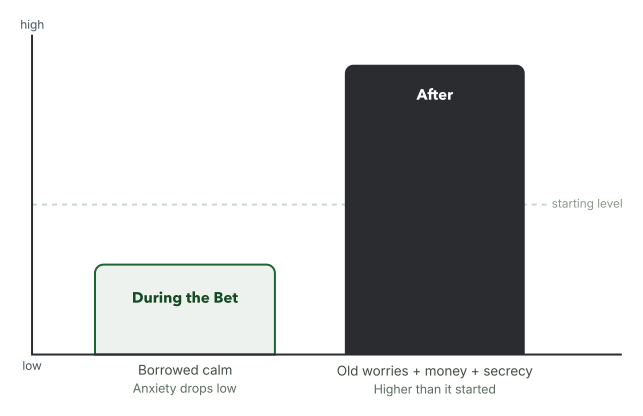
Gambling doesn't remove anxiety. It borrows against it — and the interest comes due the same night.
Signs Your Anxiety and Gambling Are Feeding Each Other
- You bet more on high-stress days.
- Urges spike at night when the mind won't stop.
- Relief during, dread after — reliably.
- More irritable on days you don't gamble.
- The worries now include the gambling itself (discovery, statements, math).
- Quit attempts spike your anxiety so hard you conclude you "need" it.
Three or more, and this page isn't a coincidence. Anonymous self-assessment →
Frequently Asked Questions
Why do I gamble when I'm anxious?
Because it works — briefly. A live bet forces single-point focus and floods the reward system, interrupting anxious rumination better than most things you've tried. It succeeds for an hour, then bills you in money and worse anxiety.
Why is my anxiety worse after gambling?
Losses, secrecy, and self-directed anger are anxiety accelerants — and the original worries are untouched. Relief-then-rebound is the loop's signature.
Can gambling cause an anxiety disorder in someone who never had one?
Yes — financial threat, a hidden double life, and sleep loss are genuinely anxiety-generating, and for many people the clinical anxiety follows the gambling. Either order is treatable; treatment just has to address both.
Do I have to figure out which came first?
No. The loop is the target, not the origin story — though the assessment explores it, because it shapes your relapse-prevention plan.
Will anxiety medication stop the gambling?
Alone, usually not — no FDA-approved medication exists for gambling disorder, and medicating the anxiety without treating the gambling leaves the behavioral loop intact. It can help as part of integrated care.
Is "stress gambling" real?
Gambling as stress and emotion regulation is one of the most documented pathways into gambling disorder — and specifically what emotion-regulation treatment targets.
What do I do tonight when the urge hits at 11 p.m.?
Delay is the skill: urges crest and fall, usually within 20–30 minutes if not fed. Move rooms, call someone, put the phone on a charger in another room, breathe long exhales. A stopgap, not treatment — but it wins single battles while you set up the war. Practical tools →
Does Reset treat anxiety even though it's a gambling program?
Yes — that's the point. Anxiety, depression, and trauma are treated inside the curriculum when they occur with gambling. Anxiety with no gambling component: we'll help you find a better-fit program.
Related Conditions

Depression & Gambling
Trauma & Gambling