
How It Works: From First Call to First Group
The hardest part of treatment is the moment before it — the tab open on your phone, the number half-dialed, the "what even happens if I call?" This page removes the mystery: exactly what happens, in order, nothing glossed over.
About a Minute
Step 1 — Verify Your Insurance
Online form or one call — Verify insurance or call / text. We check your plan's IOP-level behavioral health benefits and come back with the full picture: deductible status, copay, authorization. You'll know what this costs before you decide anything. No obligation created by asking.
60–90 minute Phone Call
Step 2 — A Confidential Clinical Assessment
A licensed clinician, not a salesperson. Your gambling pattern, what's underneath it — mood, anxiety, sleep, stress — your goals, your history. Two things going in: you don't need to have decided to quit (ambivalence is normal, and the assessment is a safe place to be honest about it), and you can't fail it. The output is a recommendation — our IOP, or, if weekly counseling or a higher level fits better, exactly that, said plainly, with referrals. Gambling disorder goes unasked-about in most healthcare settings; this hour is the opposite.
Rolling Admission
Step 3 — Your Schedule, Your Track
Morning or evening track, Mon/Wed/Fri groups, individual session with your primary clinician. Rolling admission is designed so you can start group the same week as your assessment — no waiting for a cohort to fill.
Before your first session
Step 4 — Week One
Before your first group: a short tech check (any device with a camera; we test the link together), electronic intake paperwork, and a welcome call so the first session isn't full of strangers. In group, nobody is forced to perform — first-timers typically listen more than talk, and the curriculum is built so any session is a valid entry point. Expect the dread to peak in the minute before the video connects — and to break somewhere around the moment someone else describes the exact loop you thought was only yours.
Your First Week
First Call to First Group
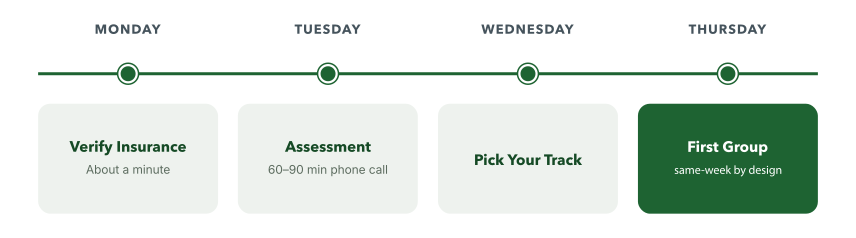
Admissions is designed to take you from first contact to first group within a week.
What Your Week Looks Like After That
Full structure and curriculum: In brief: group Mon/Wed/Fri (skills + applied blocks), individual sessions, family sessions when indicated, 6–12 week typical episode, step-down planning built into the final phase.
Not sure you need this level at all? Take the self-assessment →.
The Confidentiality Deep-Dive
For gambling, this is the question.
- Participation is protected health information under HIPAA.
- Sessions on HIPAA-compliant video.
- No employer contact, ever.
- Nothing on public records.
- Claims process like any confidential medical claim.
One honest fine-print note most sites skip: on a family plan, the policyholder may see an Explanation of Benefits from your insurer. If that's a concern, tell admissions and we'll walk you through options including self-pay before you commit.
What Reset Costs
Insurance-dependent — which is why Step 1 exists. Most commercial California plans cover medically necessary IOP-level behavioral health care; we verify yours specifically. Self-pay on request. Either way: the complete number before you say yes, never a surprise bill.
Frequently Asked Questions
What happens when I call?
A real human on the admissions team. A short, confidential conversation, then insurance verification if you want to keep going. You can hang up at any point; nothing is triggered by calling.
Do I need a referral or diagnosis first?
No. The assessment is where diagnosis happens, if applicable.
How fast can I start?
Verification same day, assessment within days, first group the same week by design — rolling admission, no cohort waitlist.
What if I do the assessment and don't continue?
Then you don't. Zero obligation — and you leave with an honest recommendation you can use anywhere, including somewhere that isn't us.
What tech do I need?
Phone, tablet, or computer with a camera; internet; enough privacy to talk. Headphones help. We test it with you first.
What if I don't have a private space at home?
Tell us — parked cars, offices after hours, and white-noise apps are all workable; we'll problem-solve it with you.
Can my spouse join the assessment?
With your consent, yes. Family involvement in treatment itself is built in when clinically indicated.
What if I'm in crisis right now?
An IOP isn't crisis care. If you're in immediate danger or having thoughts of suicide, call or text 988 now — 24/7 — and reach out to us when you're safe.